
What it is
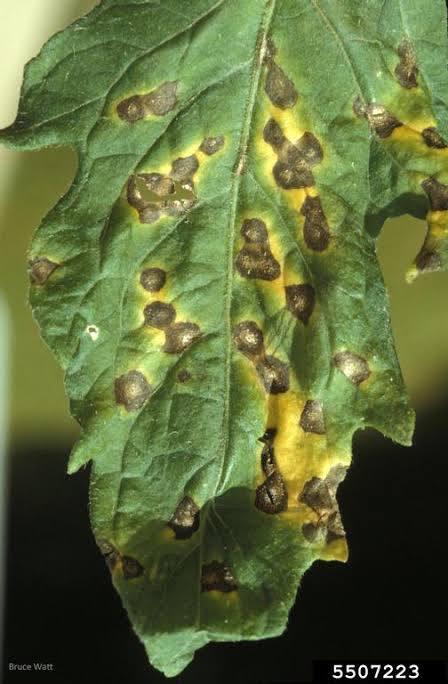
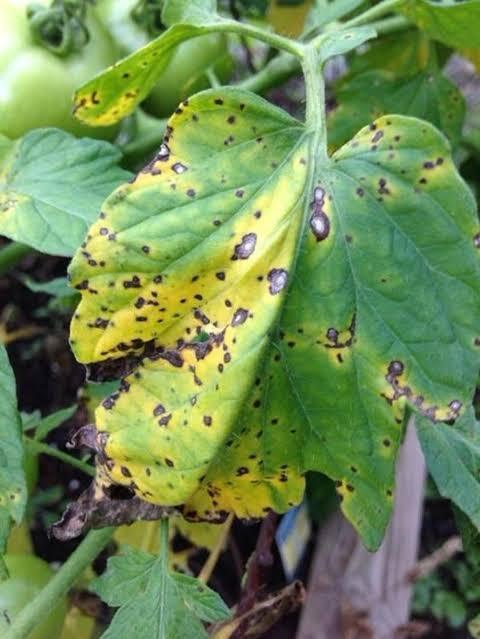
Septoria leaf spot is one of the most damaging foliage diseases of tomato, caused by the fungus Septoria lycopersici. It produces many small circular spots with dark margins and pale grey-to-tan centres, starting on the lower leaves after fruit set and moving upward. Heavy spotting causes rapid yellowing, defoliation, and reduced yield, though it rarely affects the fruit directly.
Symptoms to look for
- Many small (3 to 6 mm) circular spots with dark brown margins and grey-to-tan centres
- Tiny black dots (pycnidia) visible in the spot centres with a hand lens
- A narrow yellow halo may surround each spot
- Spots start on lower/older leaves and progress upward
- Heavily spotted leaves yellow, wither, and drop, leading to defoliation
When it spreads
Warm temperatures (about 20 to 25 degrees C) with high humidity, rain, dew, or overhead irrigation, and a dense canopy that stays wet. The fungus survives on infected debris and solanaceous weeds and spreads by rain splash, tools, workers, and insects moving through wet foliage.
Treatment
Field practices
Rotate away from tomato for two to three years, stake and prune for airflow, water at the base early in the day, mulch, control solanaceous weeds like nightshade, and remove all crop debris after harvest since the fungus overwinters in it.
Organic options
Remove and destroy the first spotted lower leaves. Copper-based fungicides or biofungicides with Bacillus subtilis protect healthy foliage when started early and repeated every 7 to 10 days in wet weather. Mulch to reduce spore splash from the soil.
Active ingredients
- copper hydroxide
- copper oxychloride
- Bacillus subtilis
Chemical options
Protectant fungicides such as chlorothalonil or mancozeb applied on a 7 to 10 day schedule give good control, especially preventively. Products with azoxystrobin or difenoconazole are also effective; alternate modes of action to slow resistance and cover lower leaves thoroughly.
Active ingredients
- chlorothalonil
- mancozeb
- azoxystrobin
- difenoconazole
Safety
Wear gloves, a mask, and eye protection when spraying. Follow the label pre-harvest interval before picking, commonly a few days for copper and chlorothalonil products. Keep children and animals away from treated plants until dry, and store chemicals out of reach.
Preventing it next season
There are no fully resistant varieties, so rely on clean seed, crop rotation, wide spacing, base watering, mulching, and prompt removal of lower spotted leaves. Keep foliage dry and scout regularly so the disease is caught before it builds up.