
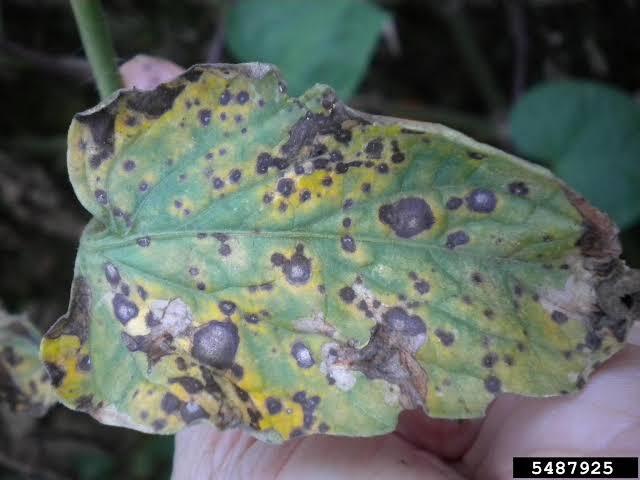
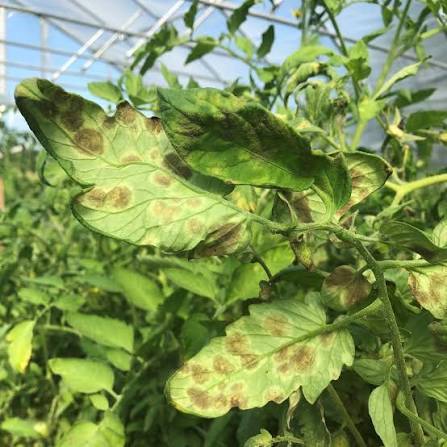
What it is
Leaf mold is a fungal disease caused by Passalora fulva that mainly affects tomatoes grown under high humidity, such as in greenhouses, high tunnels, or crowded, poorly ventilated plantings. It attacks foliage, causing yellow blotches above and olive mould below, and can defoliate plants and reduce yield when humidity stays above about 85 percent.
Symptoms to look for
- Pale green to yellow spots with no clear edges on the upper surface of older leaves
- Velvety olive-green to brown mould on the underside directly below the spots
- Spots merge, leaves turn yellow-brown, curl, wither, and drop
- Lower and inner leaves affected first, spreading upward
- In severe cases blossoms and fruit can be infected
When it spreads
High relative humidity (above 85 percent) and leaf wetness, with temperatures around 20 to 24 degrees C. It is worst in enclosed, humid, poorly ventilated growing spaces; in dry open-field conditions it is much less common. Spores survive on debris, seed, stakes, and structures for up to a year.
Treatment
Field practices
Grow resistant varieties where available, keep relative humidity below 85 percent with good airflow, avoid overhead watering, stake and prune for ventilation, use wider spacing, remove infected leaves and crop debris, and treat seed with hot water (about 50 degrees C for 25 minutes) or use certified clean seed.
Organic options
Lower humidity first: improve ventilation, space and prune plants, and stop wetting the leaves. Remove and destroy infected leaves. Copper fungicides or biofungicides based on Bacillus subtilis can protect healthy foliage when applied early and repeated every 7 to 10 days.
Active ingredients
- copper hydroxide
- copper oxychloride
- Bacillus subtilis
Chemical options
Apply protectant or systemic fungicides labelled for tomato leaf mold on a 7 to 14 day schedule, tightening in humid conditions. Effective actives include chlorothalonil, mancozeb, and strobilurins such as azoxystrobin. Alternate modes of action to avoid resistance, since many races of the fungus exist.
Active ingredients
- chlorothalonil
- mancozeb
- azoxystrobin
Safety
Wear gloves, a mask, and eye protection when spraying fungicides, especially in enclosed greenhouses where spray can concentrate; ventilate before re-entry. Follow the label pre-harvest interval before picking, and keep children and animals out of treated structures until sprays have dried.
Preventing it next season
The key is humidity control: ventilate greenhouses and tunnels well, avoid crowding and overhead irrigation, keep foliage dry, use resistant varieties and clean seed, and clean up debris and disinfect structures between crops.