
What it is
This class most likely refers to Alternaria alternata, which is distinct from early blight (Alternaria linariae / solani). A. alternata causes Alternaria stem canker, leaf spotting, and black mould (fruit rot on ripe tomatoes). Note the label is ambiguous: early blight is also an Alternaria disease and has its own class, so confirm what these training images show.
Symptoms to look for
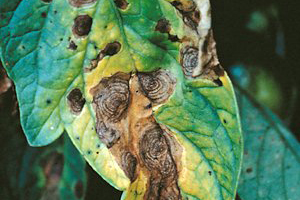
- Dark brown to black leaf spots, sometimes with concentric rings, hard to tell apart from early blight
- Dark, sunken cankers with concentric rings on stems near the soil line
- Yellowing and death of leaf tissue between the veins
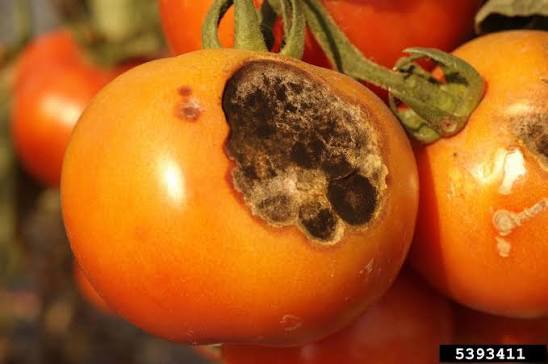
- Small to large sunken black lesions on ripe or wounded fruit (black mould)
- Fruit lesions may show black velvety spore growth in humid weather
When it spreads
Warm, humid conditions with leaf wetness from rain, dew, or overhead irrigation. A. alternata is a weak pathogen that mainly colonises stressed, wounded, sun-scalded, or over-ripe tissue, so injured and stressed plants are most at risk.
Treatment
Field practices
Avoid wounds and sunscald by keeping good leaf cover, harvest promptly, rotate crops, stake and prune for airflow, water at the base, and clear crop debris. Keep plants well nourished so tissue stays vigorous and less prone to this weak pathogen.
Organic options
Remove infected leaves, stems, and fruit and avoid injuring plants. Copper sprays or Bacillus- and Trichoderma-based biofungicides can protect healthy tissue when applied early and repeated every 7 to 10 days. Harvest ripe fruit promptly to reduce black mould.
Active ingredients
- copper hydroxide
- Bacillus subtilis
- Trichoderma harzianum
Chemical options
Protectant fungicides used for early blight also control Alternaria alternata: chlorothalonil, mancozeb, or products with azoxystrobin or difenoconazole applied every 7 to 14 days. Alternate modes of action to slow resistance and ensure good coverage of stems and lower leaves.
Active ingredients
- chlorothalonil
- mancozeb
- azoxystrobin
- difenoconazole
Safety
Wear gloves, a mask, and eye protection when spraying fungicides, and follow the label pre-harvest interval before picking. Keep children and livestock away from treated plants until sprays dry, and store chemicals safely out of reach.
Preventing it next season
Use clean seed, avoid mechanical injury during staking and harvest, control other leaf diseases that weaken plants, and pick fruit before it over-ripens. Good airflow and dry foliage reduce infection.