
What it is
Early blight is a common fungal disease caused mainly by Alternaria linariae (formerly Alternaria solani). It first attacks older, lower leaves and can spread to stems and fruit, causing defoliation and reduced yield. It also affects potato, and occasionally pepper and eggplant.
Symptoms to look for
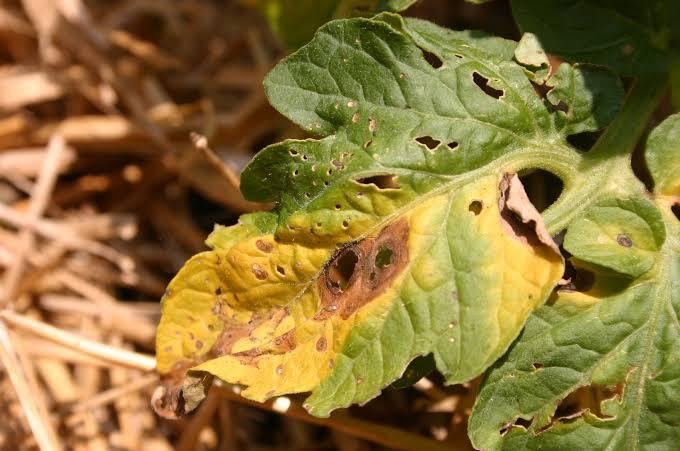
- Small dark brown to black spots on older, lower leaves first
- Spots enlarge and develop concentric rings like a bull's-eye or target
- A yellow halo often surrounds each spot
- Heavily spotted leaves yellow, die, and drop, exposing fruit
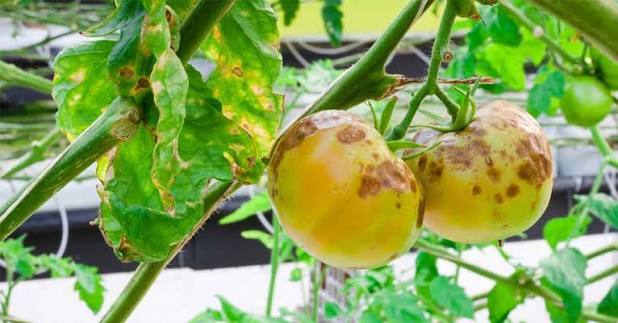
- Dark sunken lesions can form on stems (collar rot) and on fruit near the stem
When it spreads
Warm, humid weather (about 24 to 30 degrees C), heavy dew, rain, or overhead irrigation, and plants stressed by poor nutrition or heavy fruit load. The fungus survives in soil and crop debris between seasons.
Treatment
Field practices
Rotate away from tomato, potato, pepper, and eggplant for two to three years, stake and prune for airflow, remove lower infected leaves, keep plants well fed and watered to reduce stress, and clear crop debris after harvest.
Organic options
Pick off and destroy the first spotted leaves. Copper fungicides or biofungicides based on Bacillus subtilis or Trichoderma harzianum can slow spread when applied early and repeated every 7 to 10 days. Mulch to stop soil splashing spores onto lower leaves.
Active ingredients
- copper hydroxide
- copper oxychloride
- Bacillus subtilis
- Trichoderma harzianum
Chemical options
Apply protectant fungicides such as chlorothalonil or mancozeb on a 7 to 14 day schedule, tightening to 7 days in wet weather. Products containing azoxystrobin, pyraclostrobin, or difenoconazole give good control; alternate modes of action to avoid resistance. Full coverage of lower leaves is essential.
Active ingredients
- chlorothalonil
- mancozeb
- azoxystrobin
- pyraclostrobin
- difenoconazole
Safety
Wear gloves, a mask, and eye protection when spraying. Observe the label pre-harvest interval, commonly 3 to 7 days for many tomato fungicides, before picking. Keep children and livestock away from freshly sprayed plants until dry, and store products out of reach.
Preventing it next season
Use clean seed and resistant varieties where possible, mulch around the base, avoid wetting foliage, and scout lower leaves regularly so the first spots are removed before the disease builds up.