
What it is
Late blight is a fast-moving disease caused by the water mould Phytophthora infestans, an oomycete rather than a true fungus. It attacks leaves, stems, and fruit of tomato and potato and can destroy a whole crop within days in cool, wet weather. It is the same pathogen that caused the Irish potato famine.
Symptoms to look for
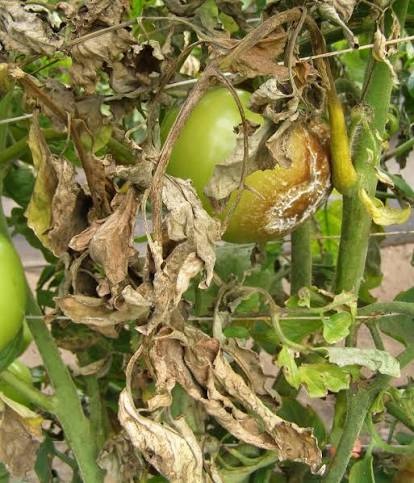
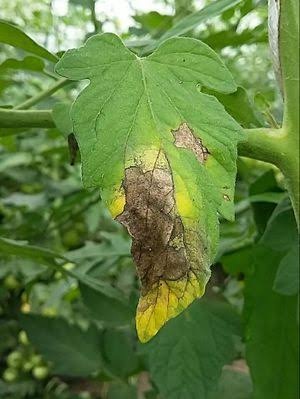
- Irregular greenish, water-soaked spots on leaves that quickly enlarge
- Spots turn brown to purplish-black and may have a pale halo
- White fuzzy mould on the underside of leaves in damp weather
- Dark, greasy lesions on stems and firm brown patches on fruit
- Rapid collapse and death of foliage within days
When it spreads
Cool, wet conditions (roughly 15 to 21 degrees C) with high humidity, fog, dew, or rain. Prolonged hot, dry weather slows or stops its spread, so risk is highest during cool, humid, or irrigated periods.
Treatment
Field practices
Plant resistant varieties where available, remove volunteer tomato and potato plants, avoid overhead irrigation, space and stake plants for good airflow, and scout daily during cool wet spells. Destroy cull piles and crop debris.
Organic options
Remove and destroy infected plants immediately and do not compost them. Copper-based sprays such as copper hydroxide or Bordeaux mixture can protect healthy foliage if applied before or at the very first sign of disease, repeated every 5 to 7 days in wet weather. Once late blight is established, organic options rarely stop it.
Active ingredients
- copper hydroxide
- copper oxychloride
- Bordeaux mixture
Chemical options
Use protectant fungicides labelled for late blight before infection, then oomycete-specific products once conditions favour disease. Chlorothalonil and mancozeb are common protectants; systemic products containing mandipropamid, cymoxanil, or dimethomorph give stronger control. Alternate different modes of action and tank-mix with chlorothalonil to slow resistance. Spray every 5 to 7 days in high-risk weather.
Active ingredients
- chlorothalonil
- mancozeb
- mandipropamid
- cymoxanil
- dimethomorph
Safety
Wear gloves, long sleeves, and eye protection when mixing and spraying copper or fungicides. Follow the pre-harvest interval on the product label, often 3 to 14 days, before picking fruit. Keep children and animals away from treated plants until sprays have dried, and never spray near drinking water.
Preventing it next season
Start with certified disease-free seed and transplants, keep foliage as dry as possible, water early in the day at the base, rotate crops, and remove nearby nightshade weeds and volunteers that can harbour the pathogen.