
What it is
Target spot is a serious foliar and fruit disease caused by the fungus Corynespora cassiicola, most damaging in tropical and subtropical regions. It causes small necrotic leaf spots that can develop faint rings, rapid defoliation, and sunken, pitted lesions on fruit that lead to postharvest rots. It has a wide host range including cucumber and papaya.
Symptoms to look for
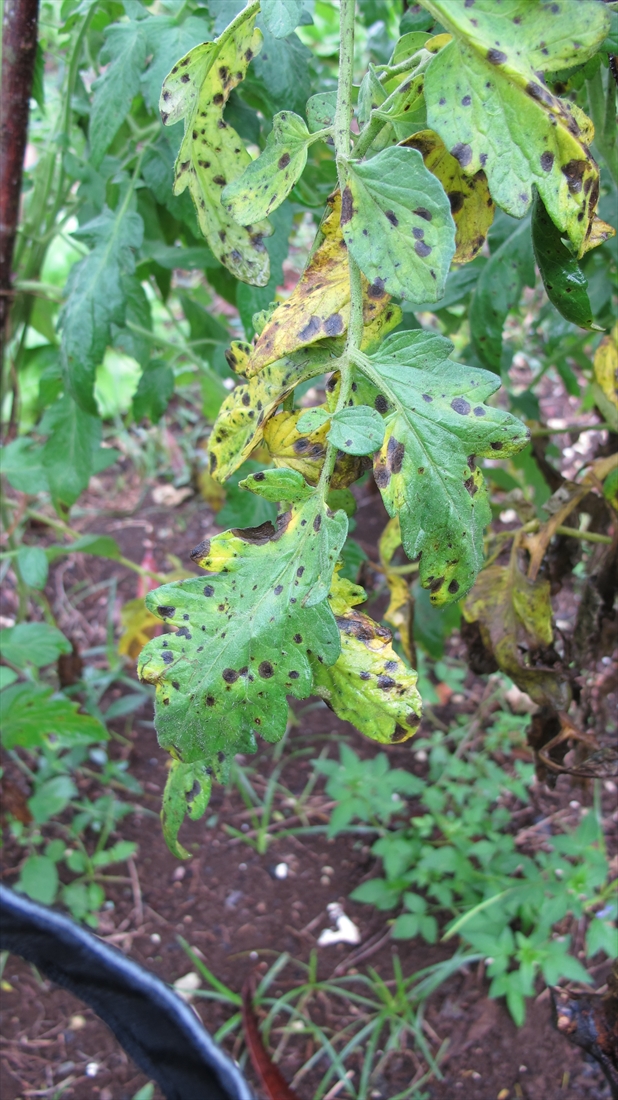
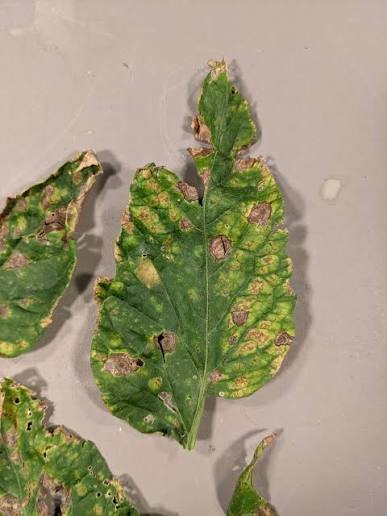
- Small necrotic leaf spots with light-brown centres and darker margins, often with a yellow halo
- Faint concentric rings may form in larger spots (target-like)
- Symptoms often start deep inside the canopy and spread rapidly upward in wet weather
- Rapid leaf blighting and premature defoliation
- Brown, sunken, pitted lesions on fruit, sometimes with X-shaped cracking
When it spreads
Moderate to warm temperatures (about 21 to 27 degrees C) with high humidity, leaf wetness, rain, or overhead irrigation. It is favoured by warm, humid, tropical and subtropical climates and dense canopies, and spores spread in wind-driven rain. Nearby papaya can be a source.
Treatment
Field practices
Use a two-to-three-year rotation, do not plant new tomato next to old crops or near papaya, stake and prune for airflow, remove lower leaves after picking trusses, control weeds, avoid overhead irrigation, and burn or bury crop debris after harvest.
Organic options
Remove and destroy infected lower leaves and old debris. Copper fungicides and biofungicides based on Bacillus subtilis or Trichoderma give partial protection when started early and repeated every 7 to 10 days. Improving airflow and keeping foliage dry are essential alongside any spray.
Active ingredients
- copper hydroxide
- Bacillus subtilis
- Trichoderma harzianum
Chemical options
Fungicides proven effective include chlorothalonil, azoxystrobin, pyraclostrobin, boscalid, and mancozeb combinations, applied every 7 to 14 days and tightened in wet weather. Acibenzolar-S-methyl (a plant-defence activator) can help. Alternate modes of action to slow resistance.
Active ingredients
- chlorothalonil
- azoxystrobin
- pyraclostrobin
- boscalid
- mancozeb
- acibenzolar-S-methyl
Safety
Wear gloves, a mask, and eye protection when spraying fungicides, and follow the label pre-harvest interval before picking (varies by product). Keep children and animals away from treated plants until dry, avoid spray drift onto food crops, and store products safely out of reach.
Preventing it next season
Given how relevant this disease is in warm, humid climates, prevention matters: use clean seed and healthy transplants, keep good spacing and airflow, water at the base, separate new plantings from old crops and papaya, and scout inside the canopy early since symptoms start there.