
What it is
Bacterial spot is caused by several Xanthomonas bacteria and affects tomato leaves, stems, and fruit worldwide. It causes small dark leaf spots, defoliation, and scabby fruit lesions that make fruit unmarketable, and can cut yields sharply in warm, wet seasons. It is very hard to control once established.
Symptoms to look for
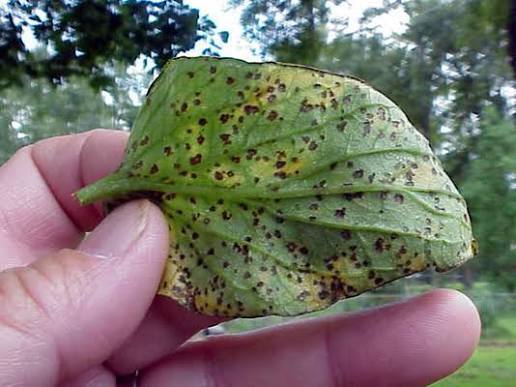
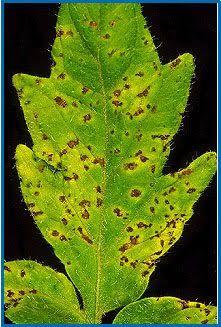
- Small water-soaked spots on leaves that turn dark brown to black
- Spots may have a yellow halo and often cluster at leaf edges
- Heavily spotted leaves yellow and drop, causing defoliation
- Raised, scabby, sometimes cracked spots on fruit
- Spots on stems and leaf stalks in severe cases
When it spreads
Warm temperatures (24 to 30 degrees C) with frequent rain, overhead irrigation, or heavy dew that splashes bacteria between plants. It spreads on contaminated seed, transplants, tools, and workers' hands, and enters through wounds and natural openings.
Treatment
Field practices
Use certified pathogen-free seed and transplants (a hot-water or dilute-bleach seed treatment reduces seedborne bacteria), rotate away from tomato and pepper for two to three years, avoid overhead irrigation, do not handle wet plants, and disinfect tools.
Organic options
There is no cure once plants are infected, so focus on slowing spread. Copper-based sprays, sometimes combined with mancozeb, give partial protection if started at the first sign, but many Xanthomonas strains tolerate copper. Remove and destroy the worst-affected plants and avoid working plants when wet.
Active ingredients
- copper hydroxide
- copper oxychloride
- mancozeb
Chemical options
Copper bactericides, often tank-mixed with mancozeb, are the main chemical option and are applied every 7 to 10 days in wet weather; results are limited where copper-tolerant strains are present. Plant-defence activators such as acibenzolar-S-methyl can improve results. There is no reliable curative chemical.
Active ingredients
- copper hydroxide
- mancozeb
- acibenzolar-S-methyl
Safety
Wear gloves, protective clothing, and eye protection when handling copper products, and wash exposed skin afterwards. Follow the label pre-harvest interval before picking. Keep children and animals away from treated areas until dry, and avoid spray drift onto water or food crops nearby.
Preventing it next season
The most effective step is starting with clean seed and healthy transplants. Inspect and reject spotted seedlings, keep foliage dry, space plants for airflow, and remove volunteer tomatoes and nightshade weeds.