
What it is
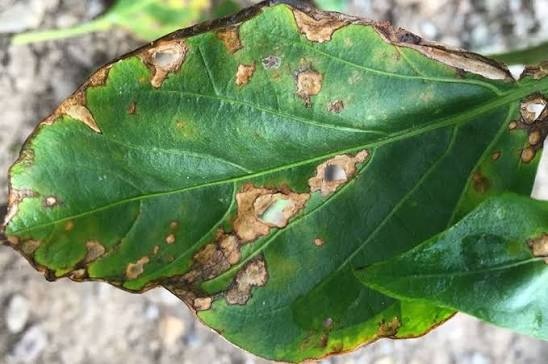
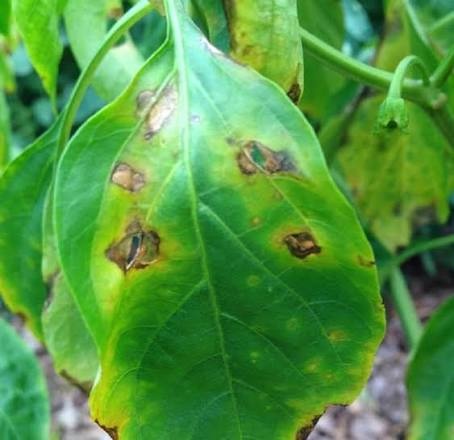
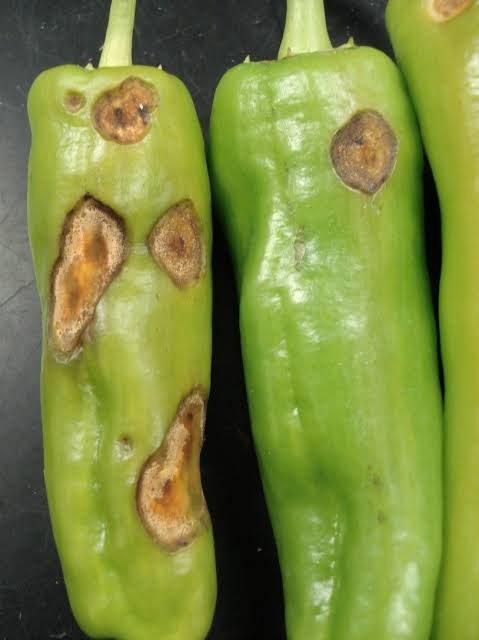
Bacterial spot of pepper is caused by several Xanthomonas bacteria, the same group that affects tomato. It causes dark, water-soaked leaf spots that turn brown, defoliation, and raised scabby lesions on fruit, leading to sunscald and yield loss. It spreads worldwide in warm, wet conditions and is very hard to control once established.
Symptoms to look for
- Small dark, water-soaked spots on leaves that turn brown, often with a yellow halo
- Spots may be angular and cluster near leaf edges and veins
- Heavily spotted leaves yellow and drop, causing defoliation
- Raised, brown, scabby, sometimes cracked lesions on fruit
- Fruit spots lead to sunscald where leaves have dropped
When it spreads
Warm temperatures (about 24 to 30 degrees C) with rain, overhead irrigation, or heavy dew that splashes bacteria between plants. It spreads on contaminated seed, transplants, tools, and workers' hands, and enters through wounds and natural openings.
Treatment
Field practices
Use certified pathogen-free seed and transplants (a hot-water or dilute-bleach seed treatment helps), rotate away from pepper and tomato for two to three years, avoid overhead irrigation, do not handle wet plants, disinfect tools, and remove crop debris and nightshade weeds.
Organic options
There is no cure once plants are infected, so focus on slowing spread. Copper sprays, sometimes with mancozeb, give partial protection if started at the first sign, but many strains tolerate copper. Remove the worst plants and avoid working plants when wet.
Active ingredients
- copper hydroxide
- copper oxychloride
- mancozeb
Chemical options
Copper bactericides, often tank-mixed with mancozeb, are the main chemical option, applied every 7 to 10 days in wet weather; results are limited where copper-tolerant strains exist. Plant-defence activators such as acibenzolar-S-methyl can help. There is no reliable curative chemical.
Active ingredients
- copper hydroxide
- mancozeb
- acibenzolar-S-methyl
Safety
Wear gloves, protective clothing, and eye protection when handling copper products, and wash exposed skin afterwards. Follow the label pre-harvest interval before picking. Keep children and animals away from treated areas until dry, and avoid spray drift onto water or food crops.
Preventing it next season
The most effective step is clean seed and healthy transplants. Inspect and reject spotted seedlings, keep foliage dry, space plants for airflow, use resistant varieties where available, and remove volunteers and nightshade weeds.