
What it is
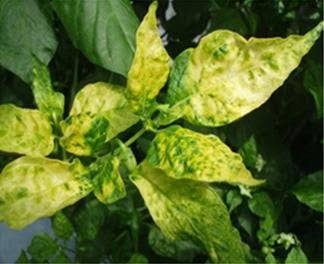
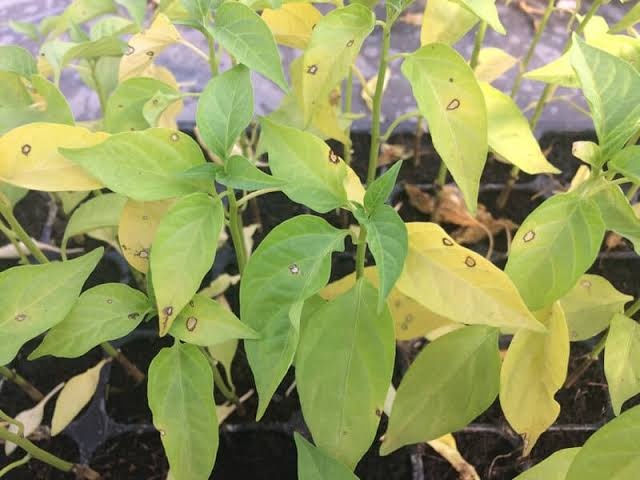
This is a general 'yellowing' (chlorosis) symptom rather than one disease. In pepper it is most often a nutrient issue - nitrogen deficiency (uniform yellowing of older, lower leaves first), or magnesium/iron deficiency (yellowing between green veins) - but it can also come from overwatering or poor drainage, wrong soil pH locking out nutrients, root problems, cold or heat stress, or early pest or virus attack. It needs diagnosis, not a single fixed treatment.
Symptoms to look for
- Uniform yellowing starting on older, lower leaves and moving up (typical of nitrogen deficiency)
- Yellowing between veins while veins stay green (typical of magnesium or iron deficiency)
- Pale, weak new growth and reduced vigour
- Sometimes wilting or leaf drop if roots or watering are the cause
- May be accompanied by pests (check leaf undersides) or virus signs if those are the cause
When it spreads
Depends on the cause: poor or unbalanced fertility, alkaline or very acidic soil that locks out nutrients, waterlogged or overwatered soil, cold or very hot spells, container growing where nutrients deplete fast, or the presence of pests or viruses. Rapidly growing plants under stress show it soonest.
Treatment
Field practices
Test the soil and correct pH toward slightly acidic to neutral so nutrients are available. Water consistently and improve drainage, add organic matter, avoid over-fertilising, protect from temperature extremes, and check leaf undersides for pests. Match the fix to the diagnosed cause.
Organic options
First find the cause. If it is nitrogen deficiency, feed with a balanced organic fertiliser, compost, or well-rotted manure at moderate rates. For magnesium deficiency (interveinal yellowing), a small amount of Epsom salt or dolomitic lime helps. Fix watering and drainage. Do not just add fertiliser blindly, and do not use pesticides unless a pest or disease is confirmed.
Active ingredients
- balanced NPK fertiliser
- compost
- Epsom salt (magnesium sulphate)
- dolomitic lime
Chemical options
If a soil test confirms a deficiency, correct it with the matching fertiliser: a nitrogen source (for example calcium nitrate or urea) for nitrogen deficiency, chelated iron for iron chlorosis, or magnesium sulphate for magnesium deficiency, at label rates. Fungicides and insecticides only apply if a disease or pest is the confirmed cause.
Active ingredients
- calcium nitrate
- urea
- chelated iron
- magnesium sulphate
Safety
Fertilisers, lime, and Epsom salt are low-hazard but wear a dust mask when handling and avoid over-application, which can burn roots or lock up other nutrients. Do not spray pesticides for yellowing unless a pest or disease is confirmed, since unnecessary spraying wastes money and harms beneficial insects.
Preventing it next season
Maintain balanced fertility guided by a soil test, keep soil pH in the right range, water consistently with good drainage, add organic matter, and scout regularly. Because yellowing has many causes, the key is diagnosing correctly before treating.