
What it is
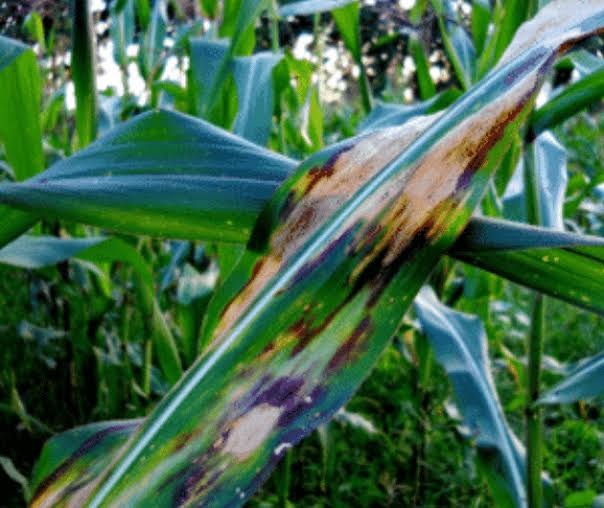
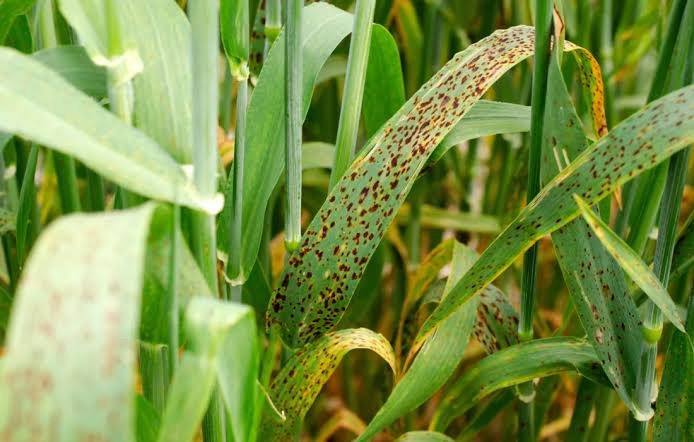
Helminthosporiosis is an older umbrella term for the maize leaf blights caused by fungi formerly grouped under Helminthosporium. Because northern leaf blight has its own class in this app, this entry covers southern corn leaf blight, caused by Bipolaris maydis. Lesions start small and diamond-shaped, then elongate into tan rectangular spots about 2 to 3 cm long limited by the leaf veins. Lesions merge and can burn large areas of leaf. It is one of the three major maize foliar diseases in Africa alongside northern leaf blight and gray leaf spot.
Symptoms to look for
- Small diamond-shaped lesions at first, which elongate as they mature
- Mature lesions rectangular, tan to brown, about 2 to 3 cm long, limited by leaf veins
- Some lesions oval and larger; husks and leaf sheaths can also be affected
- Lesions merge, causing large burnt-looking areas and complete leaf blighting
- Lower leaves usually affected first, with the disease moving upward
When it spreads
Warm temperatures (about 20 to 32 degrees C) with high humidity and frequent rain or heavy dew. It is more of a problem in warmer, humid regions than northern leaf blight, which prefers moderate temperatures. The fungus survives on maize residue, so continuous maize and reduced tillage increase risk.
Treatment
Field practices
Plant resistant hybrids, rotate away from maize for a season or more, bury or remove infested residue by ploughing, avoid continuous maize, use good spacing for airflow, and scout lower leaves from mid-season so decisions are timely.
Organic options
Resistant varieties plus residue management are the main tools. Remove or bury infected maize residue and rotate crops. Copper fungicides and Trichoderma- or Bacillus-based biofungicides can give some preventive protection when applied early, but resistant hybrids matter far more, especially for smallholders where fungicides are costly.
Active ingredients
- copper hydroxide
- Trichoderma harzianum
- Bacillus subtilis
Chemical options
Foliar fungicides used for other maize leaf blights also control southern corn leaf blight when applied around tasseling under high disease pressure. Effective actives include strobilurins (azoxystrobin, pyraclostrobin) and triazoles (propiconazole, tebuconazole), often as premixes. Alternate modes of action to slow resistance. Note fungicide use is limited in many African systems due to cost.
Active ingredients
- azoxystrobin
- pyraclostrobin
- propiconazole
- tebuconazole
Safety
Maize grain and green cobs are eaten, so follow the label pre-harvest interval before harvest. Wear gloves, a mask, and eye protection when spraying tall maize since spray can drift back onto the applicator. Keep children and animals away from treated fields until dry, and store products safely out of reach.
Preventing it next season
Resistant hybrids are the foundation, combined with crop rotation and residue burial. Avoid continuous maize, use good spacing, and scout early. Accurate diagnosis matters, since misidentifying which of the three main foliar diseases is present can cost more than 10% of yield through poor management choices.