
What it is
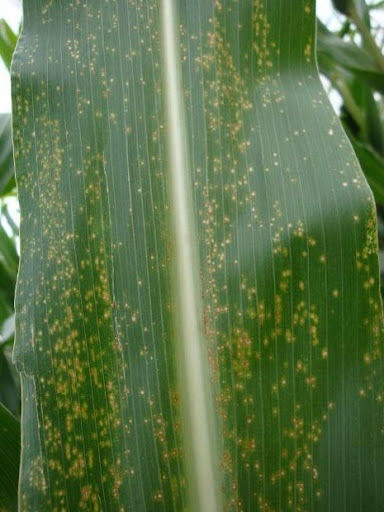
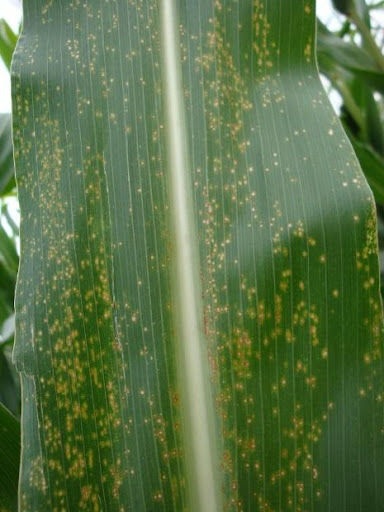
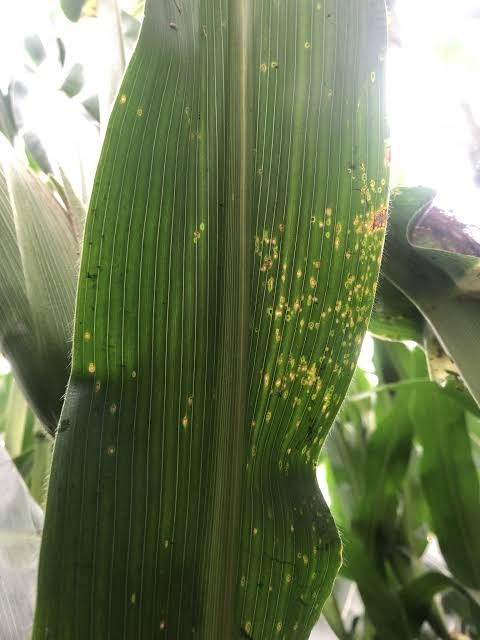
Curvularia leaf spot is a fungal disease of maize caused by Curvularia lunata. It produces small, round to oval tan to light-brown lesions (about 1 to 5 mm) with reddish-brown margins, often surrounded by a yellow halo that shows up when the leaf is held to the light. Lesions can be scattered or clustered and may merge into larger dead areas, usually in the mid to upper canopy. It is of tropical origin, a major disease in China, and has a wide grass host range.
Symptoms to look for
- Small (about 1 to 5 mm), round to oval tan to light-brown lesions
- Reddish-brown margins around the lesions
- A yellow halo that appears more yellow than brown when held to light
- Lesions scattered or in dense clusters, mainly on mid to upper leaves
- Lesions can merge into larger necrotic areas; whole leaf may yellow if severe
When it spreads
Warm, humid conditions with rain, dew, or fog and leaf wetness. The fungus overwinters in maize residue and is spread by splashing rain and wind. Continuous maize and reduced/no-till (leaving residue on the surface) increase disease pressure. Lesions often appear after rain around the reproductive (silking) stage.
Treatment
Field practices
Rotate maize with a broadleaf crop such as beans or soybean to break the cycle, manage residue by ploughing or removal, grow tolerant hybrids, avoid continuous maize, ensure good spacing and airflow, and control grassy weeds that can host the fungus.
Organic options
Manage mainly by reducing residue and inoculum rather than spraying. Remove or plough in maize residue so it breaks down, rotate to a non-grass (broadleaf) crop, and grow less susceptible hybrids. Copper or Bacillus-based biofungicides may give limited preventive protection where used; good airflow and dry foliage help.
Active ingredients
- copper hydroxide
- Bacillus subtilis
Chemical options
In many regions no fungicide is specifically labelled for Curvularia leaf spot, and it is often mild enough not to warrant spraying. Where it is severe (as in parts of Asia), broad-spectrum maize fungicides such as triazoles (tebuconazole, propiconazole) and strobilurins (azoxystrobin) that are used for other leaf spots can help. Follow local labels and alternate modes of action.
Active ingredients
- tebuconazole
- propiconazole
- azoxystrobin
Safety
If fungicides are used, wear gloves, a mask, and eye protection, and follow the label pre-harvest interval before harvest. Keep children and animals away from treated fields until dry, and store products safely out of reach.
Preventing it next season
Rotate out of maize/grasses, manage residue so it decomposes, choose tolerant hybrids, avoid continuous maize and heavy surface residue, and keep good airflow. Because impact is usually moderate and no dedicated fungicide is widely labelled, cultural control is the mainstay.