
What it is
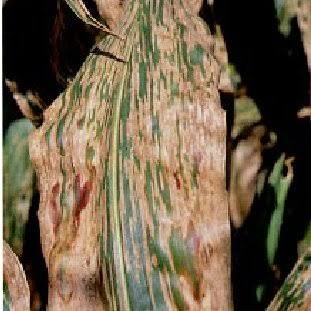
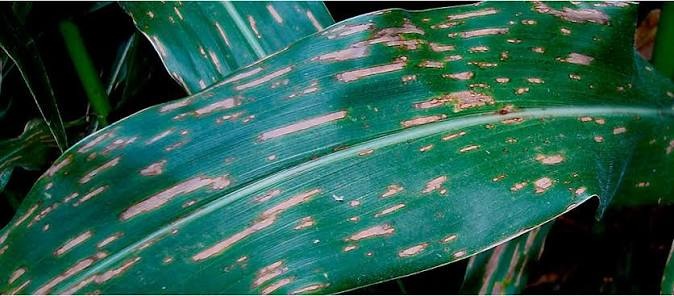
Gray leaf spot is one of the most damaging maize diseases globally, caused by Cercospora zeae-maydis (and Cercospora zeina, the dominant species in Africa). It produces long, narrow, rectangular grey-to-tan lesions that run between and are bounded by the leaf veins. Starting on lower leaves, it moves upward; severe infection blights whole leaves, weakens stalks (lodging), and can cut yields by up to 50% in susceptible hybrids.
Symptoms to look for
- Early: small tan spots (1 to 3 mm), irregular, often with yellow/chlorotic borders
- Mature: long, narrow, rectangular grey-to-tan lesions running between leaf veins
- Lesions are vein-limited, giving them straight, blocky edges
- Starts on lower leaves and progresses up the plant
- Lesions coalesce and blight whole leaves; weakened stalks may lodge
When it spreads
Warm, humid conditions with heavy fog, dew, or rain and long leaf wetness; it is common in warm, humid and irrigated maize areas. The fungus survives in maize residue, so continuous maize and reduced/no-till (surface residue) raise disease pressure. Spores are windborne and can blow in from neighbouring infested fields.
Treatment
Field practices
Grow resistant or tolerant hybrids (the most cost-effective tool for smallholders), rotate away from maize for one to two years, bury or remove maize residue, avoid continuous maize and heavy surface trash, plant at the onset of rains and on time, and ensure good spacing and airflow.
Organic options
Manage mainly by reducing residue and using resistant hybrids rather than spraying. Rotate away from maize, plough in or remove residue so it breaks down, and grow tolerant varieties. Copper or Bacillus-based biofungicides give limited preventive help; good spacing and airflow reduce leaf wetness.
Active ingredients
- copper hydroxide
- Bacillus subtilis
Chemical options
On susceptible hybrids under high pressure, foliar fungicides applied around tasseling protect yield. Effective actives include triazoles (propiconazole, tebuconazole, flusilazole, often mixed with carbendazim) and strobilurins (azoxystrobin, pyraclostrobin). Spray when disease first appears and weather favours it; alternate modes of action to slow resistance. In many African smallholder systems, cost limits fungicide use.
Active ingredients
- propiconazole
- tebuconazole
- azoxystrobin
- pyraclostrobin
Safety
If fungicides are used, wear gloves, a mask, and eye protection, and follow the label pre-harvest interval before harvest. Some products (like flusilazole/carbendazim) require care; avoid spraying before rain. Keep children and animals away from treated fields until dry, and store products safely out of reach.
Preventing it next season
The most practical defence is resistant/tolerant hybrids combined with rotation and residue management. Plant on time (at the onset of rains), avoid continuous maize and heavy surface residue, keep good spacing, and scout lower leaves early so decisions (including any fungicide) can be made before the disease climbs to the ear leaves.