
What it is
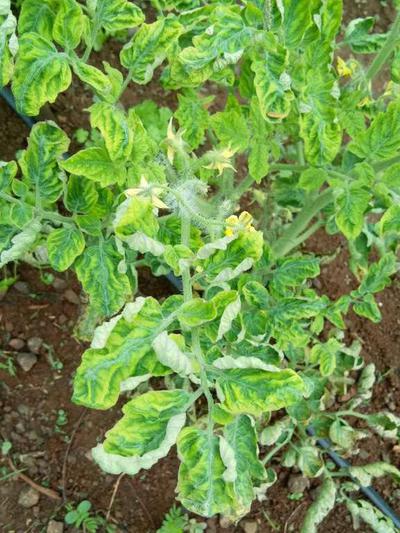
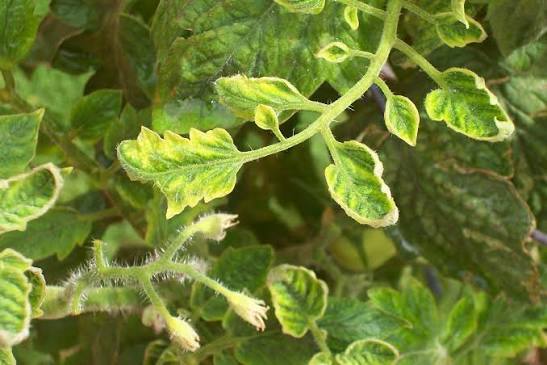
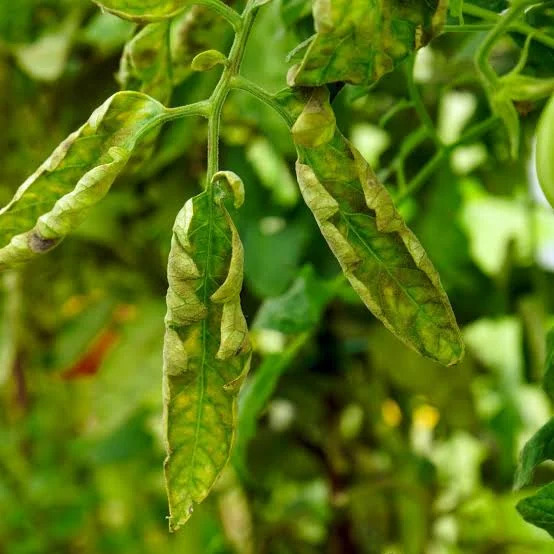
Tomato yellow leaf curl is a serious viral disease spread by the whitefly Bemisia tabaci. Infected plants become stunted and bushy with small, upward-curling, yellow-edged leaves and drop their flowers, which can cause near-total yield loss when plants are infected young. The virus is not spread by seed or by touch, only by whiteflies.
Symptoms to look for
- Young leaves turn yellow, especially along the edges
- Leaflets curl upward and inward and become smaller
- Plants are stunted with a bushy, upright appearance
- Flowers drop before setting fruit, sharply reducing yield
- Whiteflies often visible on the underside of leaves
When it spreads
Warm weather with high whitefly populations, common in late spring through autumn and near other tomato, pepper, bean, or ornamental hosts. Nearby weeds and old crop residues let whiteflies and the virus persist between crops.
Treatment
Field practices
Use TYLCV-resistant or tolerant varieties where available and virus- and whitefly-free transplants. Raise seedlings under fine netting, remove infected plants promptly, control weeds and volunteers that host whiteflies, avoid continuous tomato cropping, and plant tall barrier crops such as maize around fields.
Organic options
There is no cure for infected plants, so pull them up and destroy them to remove the virus source. Manage whiteflies with yellow sticky traps, insecticidal soap or neem oil sprays to the leaf undersides, and fine insect netting over seedbeds. Reflective (silver) mulch repels whiteflies.
Active ingredients
- neem oil
- insecticidal soap
- potassium salts of fatty acids
Chemical options
Control the whitefly vector rather than the virus. Neonicotinoid insecticides (imidacloprid, thiamethoxam, or dinotefuran) applied to soil or drip at transplanting protect young plants; foliar products such as pyriproxyfen and spiromesifen target eggs and nymphs. Rotate insecticide groups to avoid whitefly resistance.
Active ingredients
- imidacloprid
- thiamethoxam
- dinotefuran
- pyriproxyfen
- spiromesifen
Safety
Neonicotinoids are highly toxic to bees, so do not spray flowering plants and apply in the evening when bees are not active. Wear gloves and a mask when spraying, follow the label pre-harvest interval, and keep children and animals away from treated plants and soil drenches until dry.
Preventing it next season
Start with resistant varieties and clean, whitefly-free transplants raised under netting. Keep a tomato-free break between crops, destroy old plants right after harvest, and monitor whitefly numbers closely with sticky traps so control starts early.