
What it is
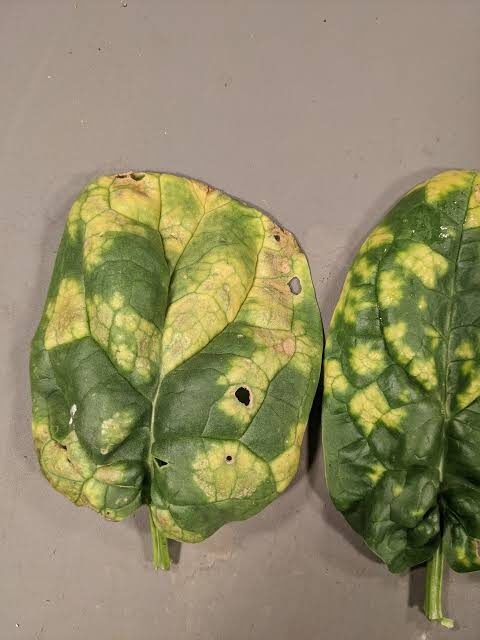
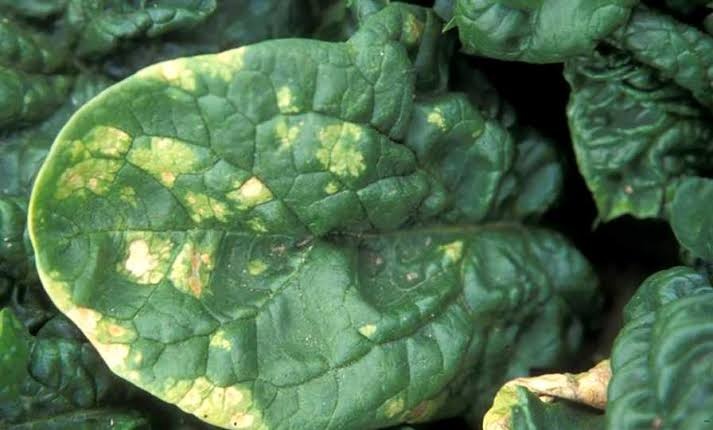
Downy mildew, also called blue mold, is the most widespread and destructive disease of spinach, caused by the oomycete (water mould) Peronospora effusa. It shows as dull yellow, irregular spots on the upper leaf surface with a grey-to-purple downy growth on the underside. It spreads fast in cool, wet weather and can make leaves unmarketable within days. Many races exist and can overcome resistant varieties.
Symptoms to look for
- Dull to bright yellow, irregular spots on the upper surface of leaves and cotyledons
- Grey to purple-blue downy (fuzzy) growth on the underside directly below the spots
- Spots enlarge, turn tan and dry; leaves may curl and become distorted
- Heavily infected plants may be stunted or die; inner leaves sometimes escape
- Symptoms usually appear 7 to 10 days after infection and spread fast
When it spreads
Cool, wet conditions with high humidity, fog, dew, or rain and long leaf wetness. Dense plantings and overhead irrigation keep leaves wet and drive rapid spread. The pathogen survives on debris, volunteer spinach, some weeds, and seed, and spores are windborne.
Treatment
Field practices
Plant downy-mildew-resistant varieties (matched to local races where known), use clean seed, avoid overhead irrigation, use wider spacing and lower plant density for airflow, remove volunteers and debris, and rotate crops. Reducing leaf wetness is the single biggest lever.
Organic options
For organic growers, resistant varieties are the main tool since curative sprays are limited. Improve airflow, avoid overhead watering, use wider spacing, and remove infected plants and debris. Copper fungicides give only partial protection and must be applied preventively.
Active ingredients
- copper hydroxide
- copper oxychloride
Chemical options
In conventional fields, downy mildew is managed with resistant varieties plus scheduled protectant and oomycete-specific fungicides applied preventively. Effective actives include products with mandipropamid, ametoctradin plus dimethomorph, or phosphorous acid (phosphonates), alternated to slow resistance. Observe short pre-harvest intervals.
Active ingredients
- mandipropamid
- ametoctradin
- dimethomorph
- phosphorous acid (phosphonate)
Safety
Spinach is eaten whole, so strictly observe the label pre-harvest interval - which is short for many spinach fungicides. Wear gloves, a mask, and eye protection when spraying, keep children and animals away until dry, and wash leaves thoroughly before eating.
Preventing it next season
Resistant varieties plus clean seed are the foundation. Keep foliage dry (drip irrigation, wider spacing, good airflow), avoid dense plantings, remove volunteers and debris, and scout closely in cool, wet spells since the disease moves within days.