
What it is
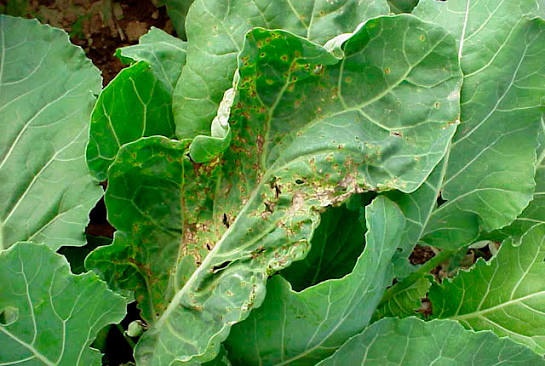
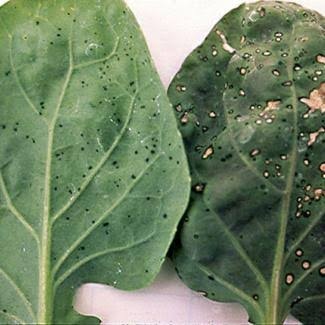
Bacterial leaf spot of spinach is caused by Pseudomonas syringae pv. spinaciae. It causes water-soaked, irregularly shaped spots that enlarge, become vein-delimited (bounded by veins), and turn dark brown, sometimes with a faint yellow halo. Large areas of leaf can die if spots merge. It is generally an uncommon, minor disease and is host-specific to spinach.
Symptoms to look for
- Water-soaked, irregularly shaped spots (2 to 3 mm) on new and mature leaves
- Spots enlarge to 1 to 2 cm, become angular, and are bounded by veins
- Spots turn dark brown, sometimes with a faint yellow (chlorotic) halo
- Spots visible from both the top and underside of the leaf, with no fungal growth
- Large leaf areas die if many spots merge
When it spreads
Cool, wet conditions with leaf wetness from rain, dew, or overhead sprinklers, which splash the bacteria between plants. The pathogen is likely seedborne. No weed or alternate hosts have been identified, and the disease is uncommon overall.
Treatment
Field practices
Use clean, tested seed since the pathogen is likely seedborne, avoid overhead irrigation to keep leaves dry, use wider spacing and drip irrigation, do not work plants when wet, rotate crops, and remove and destroy infected plants and debris.
Organic options
There is no cure for infected plants. Because the disease is uncommon, a spray programme is usually not needed. If it occurs, avoid overhead sprinklers, remove and destroy infected plants, and do not handle plants when wet. Copper sprays may give partial protection if started early.
Active ingredients
- copper hydroxide
- copper oxychloride
Chemical options
No chemical reliably cures bacterial leaf spot. Copper bactericides give only partial protection and are rarely justified for such an uncommon disease. Effort is better spent on clean seed, avoiding overhead irrigation, and sanitation.
Active ingredients
- copper hydroxide
Safety
This disease is managed mainly by clean seed and cultural methods, not spraying, so chemical exposure is low. If copper is used, wear gloves, a mask, and eye protection and follow the label pre-harvest interval. Wash leaves well before eating since spinach is eaten whole.
Preventing it next season
Start with clean, tested seed, avoid overhead watering, keep foliage dry with good spacing and drip irrigation, practise sanitation, and rotate crops. Because the disease is uncommon, prevention through clean seed and dry foliage is usually enough.