
What it is
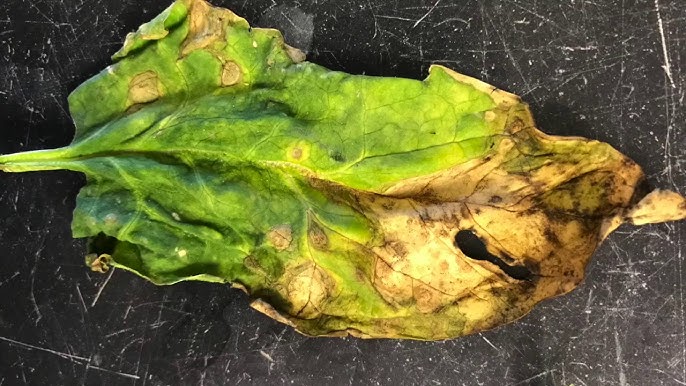
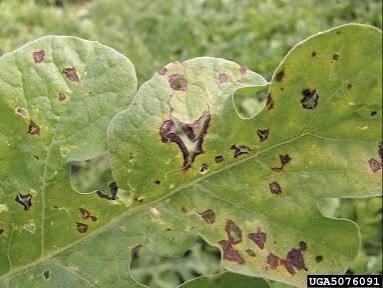
Anthracnose is a fungal disease of spinach caused by Colletotrichum spinaciae (and C. dematium). It starts as small, circular, water-soaked spots on leaves of any age that enlarge, turn brown to tan, and become thin and papery. A key sign is tiny black fruiting bodies (acervuli) in the spots. In severe cases spots merge and blight the foliage, making the crop unmarketable.
Symptoms to look for
- Small, circular, water-soaked spots on leaves of all ages
- Spots enlarge and turn brown to tan, becoming thin and papery
- Tiny black fruiting bodies (acervuli) visible in the spot centres with a hand lens
- In severe cases spots merge and blight large areas of leaf
- Whole leaves can be killed, reducing yield and quality
When it spreads
Warm, wet, humid conditions and prolonged leaf wetness from rain, dew, or overhead irrigation. The fungus is seedborne and survives on volunteer plants and crop debris. Frequent spring rains and dense, wet canopies favour outbreaks.
Treatment
Field practices
Plant certified disease-free seed (a hot-water seed treatment reduces seedborne spores), rotate away from spinach, use wider spacing and drip irrigation to keep leaves dry, remove volunteers and debris after harvest, and avoid working the crop when wet.
Organic options
Remove and destroy infected leaves and old plant debris. Copper fungicides and Bacillus subtilis biofungicides can protect healthy foliage when started early and repeated every 7 to 10 days in wet weather. Reduce leaf wetness by improving airflow and avoiding overhead watering.
Active ingredients
- copper hydroxide
- copper oxychloride
- Bacillus subtilis
Chemical options
Protectant fungicides such as chlorothalonil or mancozeb, and strobilurins like pyraclostrobin, are effective when applied preventively (before or at first symptoms) and repeated on a 7 to 10 day schedule. Alternate modes of action to slow resistance. Observe short pre-harvest intervals since spinach is eaten whole.
Active ingredients
- chlorothalonil
- mancozeb
- pyraclostrobin
Safety
Spinach is a leafy crop eaten whole, so respect the label pre-harvest interval strictly before harvest. Wear gloves, a mask, and eye protection when spraying, keep children and animals away from treated plants until dry, and wash leaves well before eating.
Preventing it next season
Because the fungus is seedborne, start with clean, certified seed or hot-water-treated seed. Rotate crops, keep foliage dry with drip irrigation and good spacing, remove old debris, and scout early so the first spots are removed before the disease spreads.