
What it is
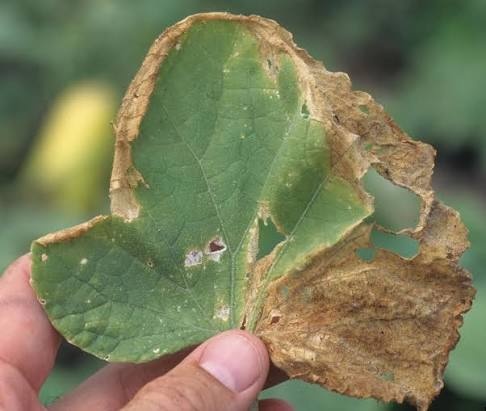
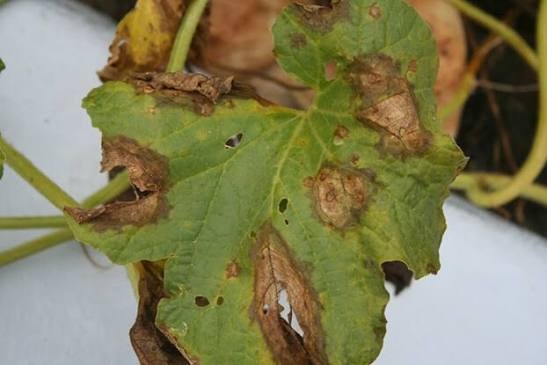
Gummy stem blight is a damaging fungal disease of cucumber and other cucurbits caused by Stagonosporopsis species (formerly Didymella bryoniae). It can attack all above-ground parts at any growth stage. The name comes from the amber, gummy ooze that seeps from stem cankers. Leaves show tan circular spots or wedge-shaped browning from the edge; stem cankers can girdle and kill the plant. The fruit-rot stage is called black rot. In cucumber, internal fruit rot is often the most important symptom.
Symptoms to look for
- Small circular tan leaf spots up to about 5 mm, sometimes with a yellow halo
- Wedge-shaped brown lesions extending inward from the leaf edge
- Pale brown stem cankers, often at the base or at wounds from pruning or leaf removal
- Amber-coloured gummy ooze exuding from stem cankers, with tiny black fruiting bodies (pycnidia)
- Internal fruit rot in cucumber, sometimes only visible externally as a narrowing at the fruit tip; seedlings can collapse and die
When it spreads
Warm, humid conditions with free moisture on the leaves. The fungus survives in infected crop debris for at least two years and can be seedborne. Even a small wound - a fingernail scratch, a pruning cut, or damage from cucumber beetles, aphids, or powdery mildew - is enough for entry. Spores spread by splashing water, wind, and on hands, knives, and clothing.
Treatment
Field practices
Buy seed from reputable sources with a history of disease-free production, rotate cucurbits on a two-year or longer cycle, deeply plough or destroy old cucurbit debris, avoid overhead irrigation, provide good spacing and airflow, control pests like cucumber beetles and aphids that create entry wounds, and handle plants gently to avoid injury.
Organic options
Remove and destroy infected plants and debris and avoid wounding plants. Sanitise hands and knives between plants when pruning or harvesting. Copper fungicides and Bacillus subtilis biofungicides give some preventive protection when applied early and repeated every 7 to 10 days. Reduce humidity and leaf wetness with good airflow.
Active ingredients
- copper hydroxide
- Bacillus subtilis
Chemical options
Protectant and systemic fungicides applied preventively give the best results. Effective actives include chlorothalonil, mancozeb, azoxystrobin, difenoconazole, and boscalid, applied every 7 to 14 days in favourable weather. Resistance to single-site fungicides develops readily, so alternate modes of action and tank-mix with a protectant.
Active ingredients
- chlorothalonil
- mancozeb
- azoxystrobin
- difenoconazole
- boscalid
Safety
Cucumbers are eaten fresh, often unpeeled, so follow the label pre-harvest interval strictly. Wear gloves, a mask, and eye protection when spraying, and ventilate greenhouses before re-entry. Keep children and animals away from treated plants until dry, and wash fruit well before eating.
Preventing it next season
Clean seed and a two-year-plus rotation are the foundation, since the fungus is seedborne and survives in debris for years. Add residue destruction, drip irrigation, good spacing, careful handling to avoid wounds, sanitised tools, and control of pests that create entry points.