
What it is
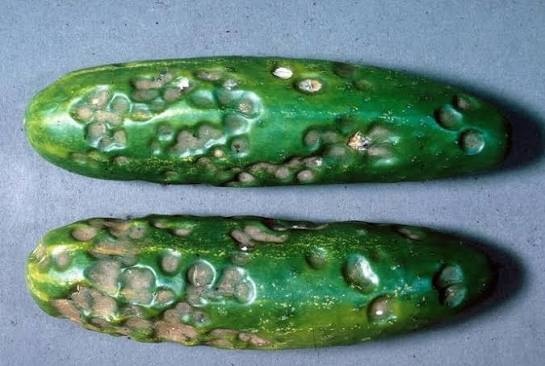
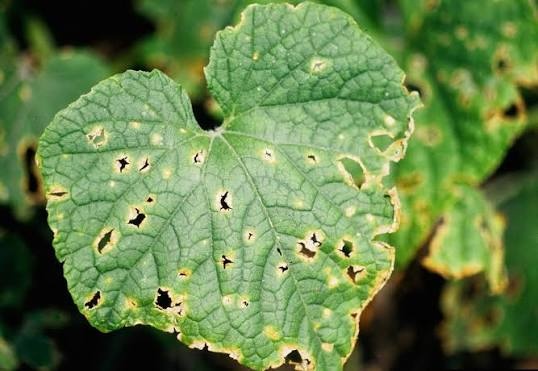
Cucurbit anthracnose is caused by the fungus Colletotrichum orbiculare and is destructive on cucumber, melon, and watermelon in warm, wet weather. On cucumber leaves it produces roughly circular light-brown to reddish spots whose centres often fall out. The most striking sign is on fruit: circular, sunken, black cankers that fill with salmon-pink spore masses in moist conditions. Losses of 30% or more are possible, and infections can continue in storage and transit.
Symptoms to look for
- Roughly circular light-brown to reddish spots on cucumber leaves
- Spot centres often crack and fall out, giving a shot-hole appearance
- Circular, sunken, black cankers on the fruit
- In moist conditions, fruit cankers fill with a gelatinous mass of salmon-pink spores
- Black bristle-like fungal structures (setae) visible in lesions with a hand lens; affected fruit can taste bitter
When it spreads
Warm (about 20 to 26 degrees C), wet weather with high humidity (near 100% for 24 hours) and frequent rain or overhead irrigation. The fungus survives in plant debris or soil for two or more years without a host, and spreads by water splash, wind, cucumber beetles, workers, and tools. Long-distance spread is by infested seed.
Treatment
Field practices
Use disease-free certified seed and resistant cucumber varieties where available, rotate away from cucurbits for two to three years, control cucurbit volunteers and weeds, use drip rather than overhead irrigation, provide good spacing, avoid handling wet plants, and deeply bury or destroy crop debris after harvest.
Organic options
Remove and destroy infected leaves, fruit, and debris. Copper fungicides and Bacillus subtilis biofungicides protect healthy tissue when started early and repeated every 7 to 10 days in wet weather. Avoid working plants when wet, since spores spread on hands and tools. Improve airflow and use drip irrigation.
Active ingredients
- copper hydroxide
- copper oxychloride
- Bacillus subtilis
Chemical options
Protectant fungicides such as chlorothalonil or mancozeb applied every 7 to 10 days give good control, especially preventively. Among newer products, benzovindiflupyr (an SDHI) has strong activity on Colletotrichum; azoxystrobin is also used. Alternate modes of action to slow resistance, and ensure thorough coverage of leaves and fruit.
Active ingredients
- chlorothalonil
- mancozeb
- benzovindiflupyr
- azoxystrobin
Safety
Cucumber fruit is eaten fresh, often unpeeled, so follow the label pre-harvest interval strictly. Wear gloves, a mask, and eye protection when spraying, keep children and animals away from treated plants until dry, avoid drift onto neighbouring food crops, and wash fruit well before eating.
Preventing it next season
Start with clean, certified seed and resistant varieties, rotate for two to three years, keep foliage dry with drip irrigation and good spacing, control volunteers and weeds, avoid working wet plants, and destroy debris after harvest since the fungus survives there for years.