
What it is
Bacterial wilt of cucumber is caused by Erwinia tracheiphila and is spread only by cucumber beetles, which carry the bacteria in their gut and infect plants through feeding wounds. The bacteria multiply in and plug the water-conducting vessels, causing individual runners and then whole plants to wilt and die, often within two weeks. There is no cure once a plant is infected, so all management targets the beetles. Watermelon is resistant; cucumber and melon are most affected.
Symptoms to look for
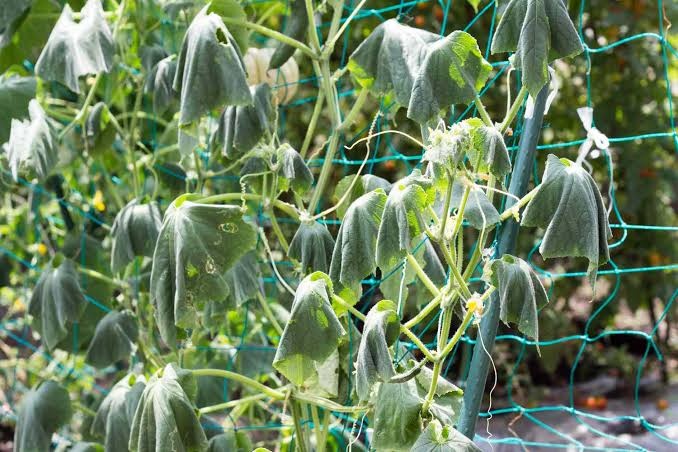
- Sudden wilting of individual leaves or runners, often dull or dark green at first
- Wilting spreads along the runners until the whole plant collapses and dies
- Wilting may look worse in the heat of the day, with little or no recovery overnight
- The string test: cut a wilting stem, press the cut ends together and pull apart slowly - sticky white bacterial ooze forms a thread
- Cucumber beetles present on the plants and feeding damage on leaves and stems
When it spreads
Beetle activity is the key factor, not weather. Beetles must make a deep feeding wound and a film of water must be present for infection. Young plants (cotyledon to 5-leaf stage) are far more susceptible, so early-season beetle pressure matters most. The bacteria overwinter inside the beetles, so where beetles are eliminated the disease is too.
Treatment
Field practices
Use row covers on young plants until flowering, plant resistant or less susceptible varieties where available, remove and destroy infected plants immediately, eliminate wild cucurbit weeds and volunteers that host beetles, plough down crop residue, and monitor beetles closely from crop emergence.
Organic options
There is no cure - remove and destroy wilting plants promptly so beetles cannot pick up the bacteria from them. Prevent beetle feeding with floating row covers over young plants (remove at flowering for pollination), reflective mulch to repel beetles, and neem products, which act as an anti-feedant. Monitor beetles with yellow sticky traps.
Active ingredients
- neem oil (azadirachtin)
- kaolin clay
- pyrethrin
Chemical options
No chemical cures the disease; control targets the beetle vector. Fast-acting insecticides applied when beetle thresholds are reached protect young plants during the critical early window (before the 5-leaf stage). Because cucurbits depend on bees for fruit set, apply in the evening and never during bloom, and rotate chemical groups.
Active ingredients
- pyrethrin
- spinosad
Safety
Cucurbits depend on bees for pollination and many beetle insecticides are highly toxic to bees - never spray during bloom, apply in the evening, and follow the label pre-harvest interval since cucumbers are eaten fresh. Wear gloves, a mask, and eye protection, keep children and animals away until dry, and wash fruit before eating.
Preventing it next season
Everything depends on keeping beetle numbers low, especially before the 5-leaf stage. Use row covers on young plants, monitor with yellow sticky traps, remove wild cucurbits and volunteers, destroy wilting plants immediately, and plough down residue. Once symptoms appear it is too late for that plant.