
What it is
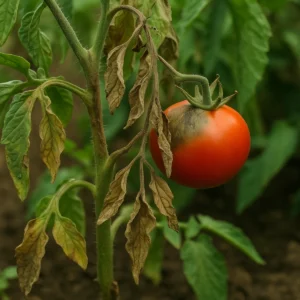
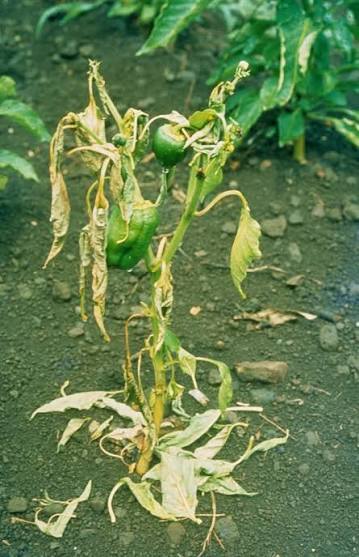
Bacterial wilt is a devastating soilborne disease caused by Ralstonia solanacearum. The bacteria enter through the roots and block the plant's water-conducting vessels, causing sudden, permanent wilting and death of otherwise green plants. It survives in soil for years and has a very wide host range, making it hard to control.
Symptoms to look for
- Sudden wilting of leaves during the heat of the day, often recovering slightly at night at first
- Rapid, permanent wilting and collapse of the whole plant while leaves stay green
- Brown discolouration inside the lower stem when cut open
- Milky white ooze streaming from a cut stem placed in clear water
- Roots and stem base may show browning and rot
When it spreads
High soil temperatures (above 29 degrees C) and wet, waterlogged soils. The bacteria spread in irrigation and surface water, on tools, and through root injuries from cultivation, transplanting, or insects. Once soil is infested it can stay infected for years.
Treatment
Field practices
Isticmaal noocyada dhirta ee adkaysiga u leh cudurka ama ku tallaal xididdo adkaysi leh. Hagaaji biyo-baxa ciidda kana ilaali beerta meelaha biyuhu fadhiistaan. Samee dalagg gedis dhowr sano adigoo beeraya dalagyo sida hadhuuudhka ama dalagyo aan la midka ahayn tamaandhada. Nadiifi qalabka beeraha, ha ka qaadin ciid ama biyo beer u cudurku ku jiro, isla markaana si degdeg ah uga saar oo u baabi’i geedaha engegay.
Organic options
There is no cure once a plant wilts, so remove and destroy infected plants and the soil around the roots, and do not compost them. Prevention is the only reliable approach: grafting onto resistant rootstocks, adding organic matter, and long rotations with non-host crops reduce losses. No spray cures the disease.
Chemical options
No chemical bactericide gives reliable control of bacterial wilt in the field. Copper and antibiotic sprays do not cure infected plants. Effort and money are far better spent on prevention, resistant rootstocks, and soil and water management than on chemical treatment.
Safety
This disease is managed mainly by sanitation, not spraying, so chemical exposure is low. Wash hands and disinfect tools after handling infected plants and soil to avoid spreading the bacteria to clean fields. Do not feed wilted plants to animals.
Preventing it next season
Use clean planting material and resistant or grafted plants, choose well-drained fields, keep infested soil and runoff away from clean areas, disinfect tools between plants, and control root-feeding insects and nematodes that create entry wounds.