
What it is
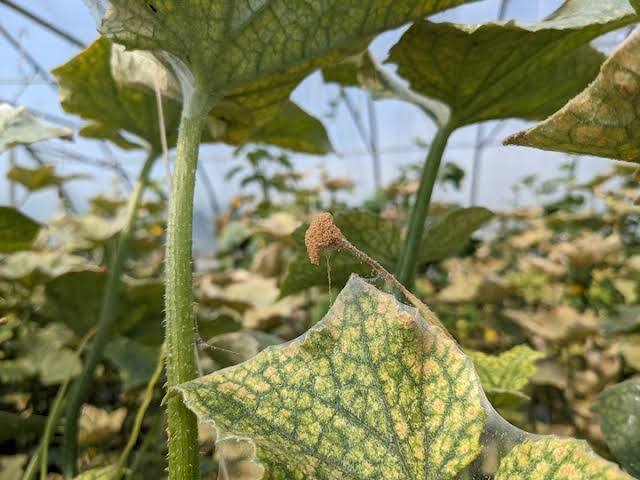
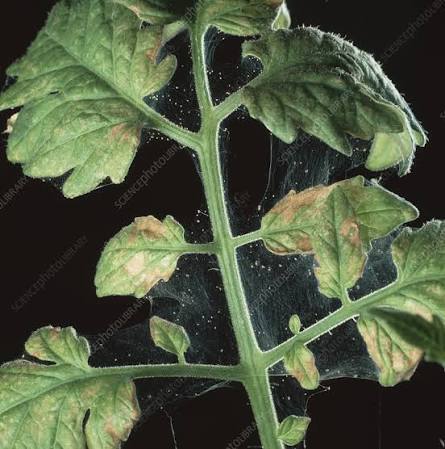
The two-spotted spider mite is a tiny sap-sucking mite (a different family from the russet mite) that feeds mostly on the underside of leaves and spins fine webbing. Feeding causes pale stippling (fine yellow flecks), then yellowing, bronzing, and leaf drop. Populations explode in hot, dry conditions and can seriously damage plants.
Symptoms to look for
- Fine pale or yellow stippling (tiny flecks) on leaves, worst on the underside
- Fine silk webbing on leaf undersides and between leaves in heavy infestations
- Leaves turn yellow then bronze, dry out, and drop
- Tiny moving specks visible on the underside with a hand lens
- Overall plant looks dull, wilted, and weakened, with reduced yield
When it spreads
Hot, dry, dusty weather, which speeds up the mite's short life cycle and reduces natural enemies. Drought-stressed plants are more vulnerable. Broad-spectrum insecticides that kill predatory mites can trigger worse outbreaks.
Treatment
Field practices
Keep plants well watered to avoid drought stress, reduce dust (which favours mites), avoid unnecessary broad-spectrum insecticides that kill natural enemies, remove and destroy heavily infested leaves, and control weeds that host mites.
Organic options
Spray insecticidal soap, horticultural oil, or neem oil thoroughly on leaf undersides, repeating every 5 to 7 days for a few rounds since eggs survive one spray. Wettable sulphur also helps. In greenhouses, release predatory mites such as Phytoseiulus persimilis. A strong water spray knocks down light populations.
Active ingredients
- insecticidal soap
- horticultural oil
- neem oil (azadirachtin)
- wettable sulphur
Chemical options
Use a true miticide (acaricide) such as abamectin, spiromesifen, or bifenazate rather than a general insecticide, which can make mites worse by killing their predators. Cover leaf undersides well, rotate chemical groups because spider mites develop resistance quickly, and repeat as the label directs.
Active ingredients
- abamectin
- spiromesifen
- bifenazate
Safety
Do not apply sulphur within a few weeks of oil sprays and avoid sulphur in very hot weather. Wear gloves, a mask, and eye protection with oils, soaps, and miticides, and follow the label pre-harvest interval before picking. Keep children and animals away from treated plants until dry.
Preventing it next season
Avoid drought stress and dust, keep natural enemies alive by minimising broad-spectrum sprays, inspect leaf undersides regularly (especially in hot dry spells), and quarantine or reject infested transplants before bringing them in.