
What it is
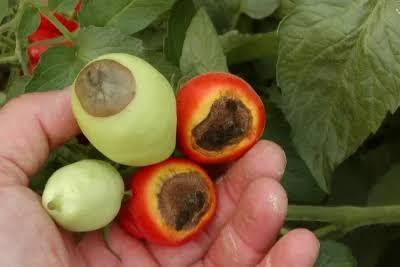
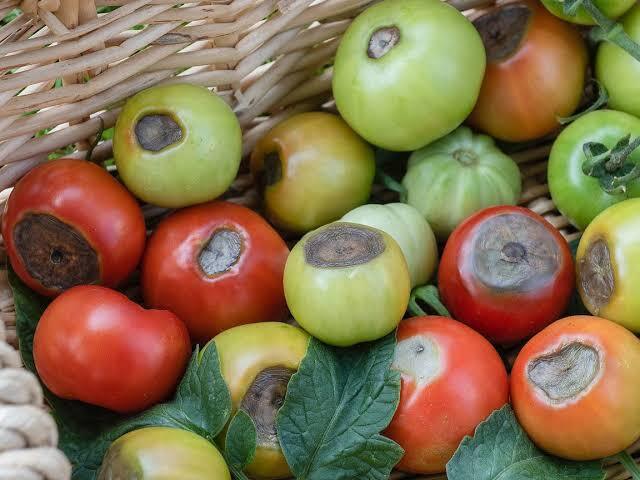
Blossom-end rot is not caused by a germ. It is a physiological disorder from too little calcium reaching the developing fruit, usually because of uneven watering rather than low soil calcium. A dark, sunken, leathery patch forms at the bottom (blossom end) of the fruit. It also affects pepper, squash, and melon.
Symptoms to look for
- A small water-soaked spot at the blossom (bottom) end of the fruit
- The spot enlarges into a sunken, dark brown to black, leathery patch
- Affected area may be covered by secondary black mould later
- First fruits of the season and rapidly growing fruit are most affected
- Only the fruit is affected; leaves and stems look normal
When it spreads
Wide swings between wet and dry soil, drought during fruit set, very rapid plant growth, high salt or excess ammonium fertiliser, and root damage, all of which limit calcium movement to the fruit. Hot spells that speed up growth increase the risk.
Treatment
Field practices
Water deeply and consistently and avoid letting soil dry out then flooding it. Mulch to hold soil moisture, do not over-fertilise with nitrogen (especially ammonium forms), maintain soil pH around 6.5 to 7.2, and avoid damaging roots with deep cultivation near plants.
Organic options
This is a growing problem, not an infection, so no spray cures it. Keep soil moisture even with mulching and regular deep watering. Remove affected fruit so the plant can direct calcium to new fruit. Where soil calcium is genuinely low, add lime or gypsum based on a soil test, well before planting.
Active ingredients
- calcium carbonate (agricultural lime)
- gypsum (calcium sulphate)
Chemical options
Foliar calcium sprays give only limited help because calcium moves poorly into leaves and fruit. If used, apply calcium nitrate or calcium chloride sprays to young fruit early, but the real fix is consistent watering and correcting soil calcium and pH. Avoid high-ammonium fertilisers, which worsen the problem.
Active ingredients
- calcium nitrate
- calcium chloride
Safety
Because this is a disorder, not a disease, insecticides and fungicides do not help and should not be used. Lime and gypsum are low-hazard, but wear a dust mask when handling them and avoid over-liming, which can lock up other nutrients.
Preventing it next season
Prepare soil with a test and correct calcium and pH before planting, choose less susceptible varieties, mulch, and set up steady irrigation from the start so plants never swing between drought and flooding during fruit set.