
What it is
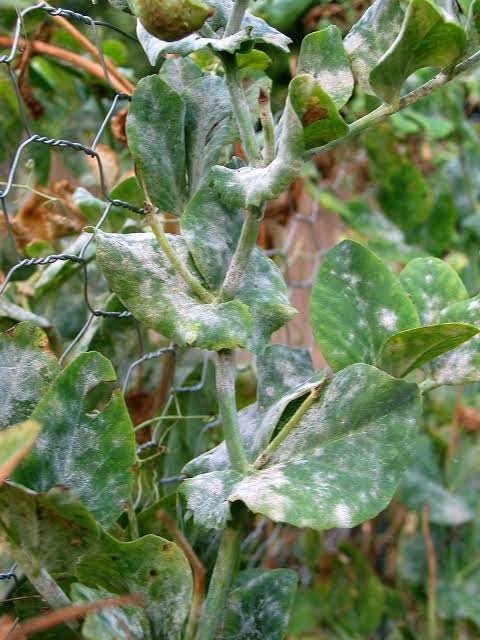
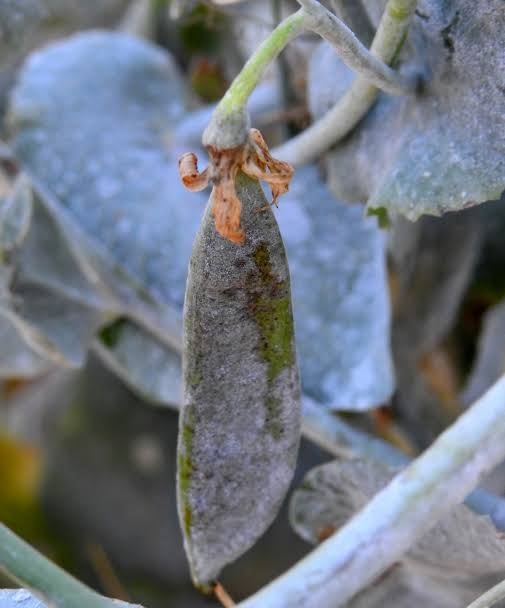
Powdery mildew of pea is caused by the fungus Erysiphe pisi. It appears as a white to grey powdery coating of mycelium and spores on the upper surfaces of leaves, then spreads to stems and pods. Severely infected foliage turns blue-white and tissue beneath may turn purple; plants can be stunted, yellow, and defoliate. Pod infection discolours and blemishes seeds, cutting quality and yield. Unusually, it thrives in dry conditions.
Symptoms to look for
- White to grey powdery patches on the upper surfaces of older leaves first
- Powder spreads to stems, stipules, and pods
- Severely infected foliage turns blue-white; tissue beneath may turn purple
- Plants become stunted, yellow, and may defoliate
- Pods develop grey-brown discolouration and small necrotic spots; seeds blemished
When it spreads
Warm dry days and cool nights that form dew - the fungus does not need free water on the leaf and thrives at about 20 to 24 degrees C. It is most severe late in the season and on late-planted crops. Spores are windborne; it can be seedborne but usually survives on living plants and debris. Late sowing greatly increases risk.
Treatment
Field practices
Plant resistant varieties (many with the er1 resistance gene exist) and early-maturing types, sow early rather than late, use wider spacing for airflow, avoid excess nitrogen, rotate crops, and remove and destroy infected debris after harvest.
Organic options
Wettable sulphur is the main organic control and works well when applied at first signs and repeated every 7 to 14 days (do not use in very hot weather or near oil sprays). Neem oil, and milk or potassium-bicarbonate sprays, also help. Garlic and neem extracts have shown good suppression in trials. Remove badly infected plants.
Active ingredients
- wettable sulphur
- neem oil (azadirachtin)
- potassium bicarbonate
Chemical options
Systemic fungicides such as those containing hexaconazole, difenoconazole, or triadimefon (triazoles), or thiophanate-methyl, control powdery mildew well when applied at first signs; a combination of difenoconazole, thiophanate-methyl, and sulphur has been highly effective in trials. Alternate modes of action to slow resistance.
Active ingredients
- hexaconazole
- difenoconazole
- thiophanate-methyl
- sulphur
Safety
Do not apply sulphur in very hot weather or within a few weeks of oil sprays, as it can burn plants. Peas are eaten, so follow the label pre-harvest interval. Wear gloves, a mask, and eye protection when spraying, keep children and animals away until dry, and wash pods before eating.
Preventing it next season
Plant resistant and early-maturing varieties and sow early, since late-sown peas suffer most. Use wider spacing for airflow, avoid excess nitrogen, rotate crops, and scout older leaves so sulphur or fungicides can start at the very first powdery patches.