
What it is
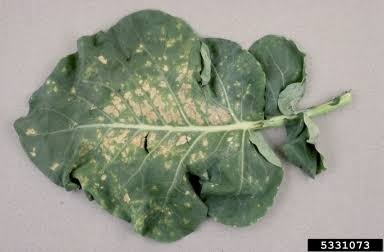
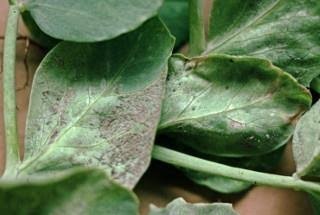
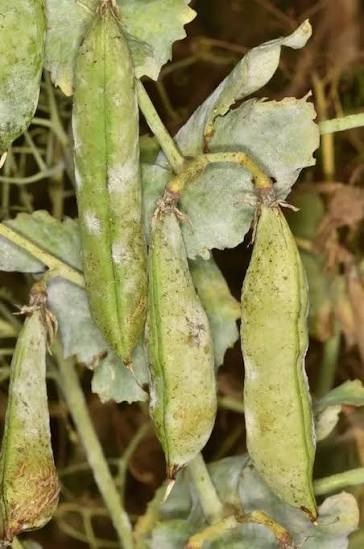
Downy mildew of pea is caused by the oomycete Peronospora viciae. It shows as yellow to yellow-brown patches on the upper leaf surface with a grey-white downy (mouldy) growth on the underside. Early, systemic infection stunts and distorts plants; later infections cause leaf spotting, brown blotches on pods, and mould inside pods, blemishing seed. The pathogen is soilborne and its resting spores can survive in soil for many years.
Symptoms to look for
- Yellow to yellow-brown patches on the upper surface of leaves and stipules
- Grey-white downy (fuzzy) mould on the underside directly below the patches
- Early systemic infection stunts and distorts whole plants
- Brown blotches on pods, sometimes with mould growing inside the pods
- Infected leaves yellow and die in cool, damp weather; seed is blemished
When it spreads
Cool, damp conditions with high humidity, dew, or rain, especially early in the season. Dense stands and wet foliage promote it. The pathogen overwinters as long-lived oospores in soil and crop debris; it is generally not seed-transmitted, but infested soil and debris are the main sources.
Treatment
Field practices
Plant resistant or tolerant varieties (avoid highly susceptible semi-leafless types where downy mildew is a problem), use a two-to-three-year rotation out of legumes, ensure good drainage and airflow, avoid dense stands, and burn or remove infested pea straw and debris after harvest.
Organic options
There is no cure once plants are infected. Remove and destroy infected plants and debris. Resistant or tolerant varieties are the main tool. Improve airflow, avoid overhead watering, use wider spacing, and rotate out of legumes for two to three years. Copper gives only partial, preventive protection.
Active ingredients
- copper hydroxide
- copper oxychloride
Chemical options
Where downy mildew pressure is high, oomycete-specific fungicides and seed dressings help. Products containing metalaxyl/mefenoxam (often as a seed treatment) reduce primary infection, and foliar oomycete fungicides may be used preventively. Recommendations vary by region; alternate modes of action to slow resistance.
Active ingredients
- metalaxyl (mefenoxam)
- cymoxanil
- mandipropamid
Safety
Peas are eaten, so follow the label pre-harvest interval for any fungicide. Wear gloves, a mask, and eye protection when spraying or handling treated seed, keep children and animals away from treated plants and seed until dry, and store products safely out of reach.
Preventing it next season
Use resistant varieties and, where available, dressed (fungicide-treated) seed, rotate out of legumes for several years, choose well-drained fields, avoid dense stands and overhead watering, and remove or burn crop debris. Because oospores survive for years, rotation and clean fields are central.