
What it is
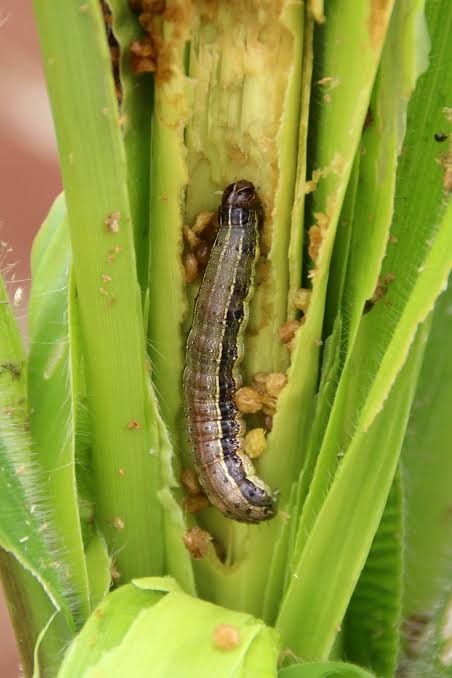
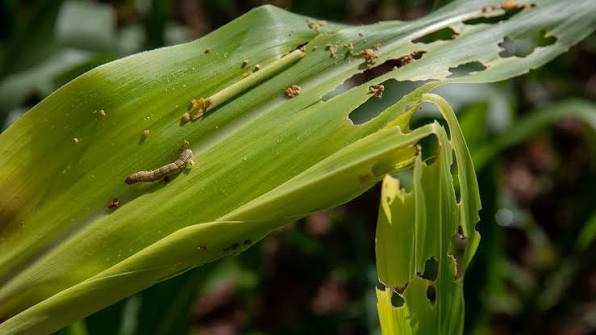
The fall armyworm (Spodoptera frugiperda) is a highly destructive caterpillar pest that became established across Africa from 2016 and is now a major threat to maize. Young larvae scrape leaves (creating a windowpane effect); older larvae chew ragged holes and characteristic rows of perforations, feed deep in the whorl leaving moist sawdust-like frass, and can bore into cobs. Heavy infestations severely reduce yield and food security.
Symptoms to look for
- Windowpane damage (scraped, translucent patches) on young leaves from small larvae
- Ragged holes and a characteristic row of perforations across leaves
- Moist, sawdust-like frass (droppings) in the whorl and on upper leaves
- Larvae in the whorl; older ones may cut young plants or bore into cobs
- Caterpillars with a pale inverted Y on the head and four dark spots on the second-to-last segment
When it spreads
Warm weather and year-round maize let generations build up quickly (a life cycle of about 30 days). Adults are strong migratory fliers, so new infestations arrive on the wind. Continuous cropping and nearby host plants (over 350 species, mainly cereals) sustain populations. It has developed resistance to several insecticides.
Treatment
Field practices
Plant early and uniformly in the area (community-wide) to avoid overlapping susceptible stages, use push-pull systems (for example Desmodium intercrop with a Napier grass border), retain crop residue and use manure (shown to lower infestation), rotate crops, and destroy old crop residues and pupae by ploughing after harvest.
Organic options
Scout the whorl twice a week and handpick or crush egg masses and larvae, especially in small plots. Spray Bacillus thuringiensis (Bt) or neem-based products into the whorl against young larvae before they burrow deep. Apply in the evening or early morning. Encourage natural enemies (parasitic wasps, predators, birds); ash or fine sand in the whorl is a traditional method.
Active ingredients
- Bacillus thuringiensis
- neem oil (azadirachtin)
- Spodoptera frugiperda nucleopolyhedrovirus (SfNPV)
Chemical options
Target young larvae in the whorl, guided by scouting thresholds. Effective actives include emamectin benzoate, spinosad/spinetoram, chlorantraniliprole, and indoxacarb, directed into the whorl. Rotate insecticide groups because fall armyworm resists many products, and avoid routine calendar spraying, which speeds up resistance and harms natural enemies.
Active ingredients
- emamectin benzoate
- spinetoram
- chlorantraniliprole
- indoxacarb
Safety
Maize is eaten, so choose products registered for maize and follow the pre-harvest interval strictly, especially near harvest. Many of these insecticides are toxic to bees and natural enemies; spray in the evening, avoid flowering plants, wear gloves, a mask, and eye protection, and keep children and animals away from treated fields until dry. Bt and neem are lower-risk options.
Preventing it next season
Monitor with pheromone traps and whorl scouting from emergence, plant early and uniformly across the community, use push-pull intercropping and good soil fertility (manure), keep fields weed-free, protect natural enemies by avoiding routine sprays, and act on young larvae before they reach the whorl base or cob.