
What it is
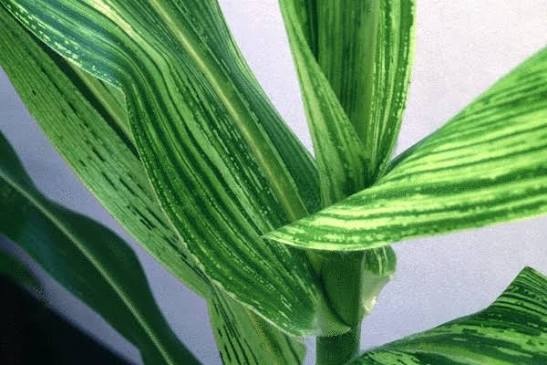
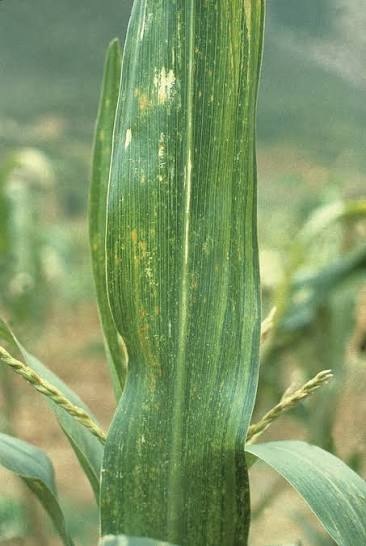
This label most likely refers to maize streak disease, caused by Maize streak virus and spread by leafhoppers in the genus Cicadulina (especially C. mbila). It is the most important and widespread viral disease of maize in sub-Saharan Africa and has been for over a century. Infected plants show chlorotic (pale yellow) spots that develop into long parallel streaks or broken stripes along the leaf veins, with stunting and poor cob development. Early infection can cause total crop loss. The virus is not seedborne and spreads only by leafhoppers.
Symptoms to look for
- Small chlorotic (pale yellow to white) spots appearing first on young leaves
- Spots develop into long, narrow, parallel streaks or broken stripes along the leaf veins
- Streaks increase in number and length on each new leaf and may fuse to cover the leaf
- Severe stunting of the plant, especially when infected young
- Poor or failed cob and seed development; symptoms appear 10 to 14 days after infection
When it spreads
Warm temperatures (about 20 to 35 degrees C) with high leafhopper populations, common in warm, low-altitude and high-rainfall areas. Leafhoppers and the virus survive year-round on wild grasses and other cereals, and on irrigated dry-season maize. Staggered or overlapping plantings let early-planted maize act as a virus reservoir for later crops.
Treatment
Field practices
Plant MSV-resistant or tolerant varieties (the single most important step, developed by IITA and partners for African conditions), plant early and uniformly across an area to avoid staggered susceptible crops, control grass weeds and volunteer maize that host the virus and leafhoppers, and rogue out and destroy diseased plants as soon as they are seen.
Organic options
There is no cure for infected plants - remove and destroy them promptly to cut the virus source. Manage leafhoppers by controlling grass weeds in and around fields, clearing a buffer of bare ground, and using neem-based sprays. Intercropping and barrier plants can reduce leafhopper movement into the crop.
Active ingredients
- neem oil (azadirachtin)
Chemical options
No chemical cures the virus; management targets the leafhopper vector. Insecticide seed treatments containing imidacloprid protect young plants during the critical early window, and foliar sprays can reduce leafhopper numbers. Chemical control is expensive and often out of reach for smallholders, so resistant varieties are the priority.
Active ingredients
- imidacloprid
Safety
Most management is cultural, so chemical exposure is low. If insecticides are used, wear gloves, a mask, and eye protection, follow the label pre-harvest interval, and handle treated seed carefully - never eat it or feed it to animals. Imidacloprid is highly toxic to bees, so avoid spraying flowering plants. Keep children and animals away from treated fields until dry.
Preventing it next season
Resistant varieties are the foundation and the most affordable option for smallholders. Add early, uniform planting across the area, strict control of grass weeds and volunteer maize, prompt removal of diseased plants, and avoiding overlapping maize crops that let leafhoppers and virus carry over.